

Benefits for Better Health with Magnesium Glycinate in Pakistan

Quick Answer: Magnesium glycinate, also called magnesium bisglycinate, is magnesium bound to the amino acid glycine. It is commonly chosen because it is generally well tolerated and can provide supplemental magnesium for people whose dietary intake is inadequate. Magnesium itself is essential for muscle and nerve function, energy production, blood glucose regulation and bone health. Research on magnesium for sleep is promising but not conclusive: a recent magnesium bisglycinate trial found a modest improvement in insomnia symptoms. Always compare the amount of elemental magnesium on the Supplement Facts panel rather than choosing a product simply because the front says 500mg or 1000mg.
Magnesium glycinate has become one of the most searched magnesium supplements in Pakistan.
And it isn't difficult to see why.
You'll see it promoted for sleep, stress, muscle cramps, recovery, bones, energy and heart health.
Some of those claims are based on magnesium's established role in the body.
Others go much further than the science.
So what does magnesium glycinate actually do?
Magnesium is an essential mineral involved in hundreds of enzymatic reactions. Your muscles, nerves, bones and cells all require adequate magnesium to function normally.
Magnesium glycinate is simply one supplemental form of that mineral.
This guide explains the real magnesium glycinate benefits, its possible role in sleep, how it compares with other magnesium forms, how much magnesium adults need, side effects and how to compare magnesium supplements in Pakistan.
What Is Magnesium Glycinate?
Magnesium glycinate is a form of magnesium in which the mineral is bound—or chelated—to the amino acid glycine.
You may also see it written as:
- Magnesium glycinate
- Magnesium bisglycinate
- Magnesium bisglycinate chelate
These names are often used for closely related chelated magnesium formulations.
Magnesium glycinate has become popular because many people find it easier to tolerate than magnesium forms commonly used for their laxative effects.
But there is an important detail that matters more than the marketing name:
How much elemental magnesium does the supplement actually provide?
Magnesium Glycinate vs Elemental Magnesium: What's the Difference?
This is one of the most important things to understand before buying magnesium.
A bottle may say:
“Magnesium Glycinate 500mg”
That does not automatically mean you are getting 500mg of elemental magnesium.
The magnesium glycinate compound contains magnesium plus glycine, so the total compound weight can be much greater than the actual magnesium content.
When comparing products, look for wording similar to:
Magnesium (as magnesium glycinate) — ___ mg
That declared amount of magnesium is generally the more useful number for comparing your actual magnesium intake.
This is especially important in Pakistan because products on the market may prominently display either compound weight or elemental magnesium.
What Does Magnesium Do in the Body?
Before discussing glycinate specifically, it helps to understand magnesium itself.
Magnesium is required for hundreds of enzymatic processes and contributes to:
- Normal muscle contraction and relaxation
- Nerve transmission
- Energy production
- Protein synthesis
- DNA and RNA synthesis
- Blood glucose regulation
- Normal blood pressure regulation
- Bone structure
- Transport of calcium and potassium across cell membranes
That means magnesium is genuinely important.
But an essential physiological role does not automatically mean magnesium supplements treat every condition associated with muscles, sleep, mood or heart health.
Magnesium Glycinate Benefits: What Does the Evidence Say?
| Potential Benefit | What You Should Know |
|---|---|
| Correcting Low Magnesium Intake | The clearest nutritional purpose of a magnesium supplement. |
| Muscle & Nerve Function | Magnesium has an established physiological role in normal muscle contraction and nerve transmission. |
| Sleep | Some studies show potential benefit, but overall evidence remains mixed. A recent bisglycinate trial found a modest improvement. |
| Stress & Anxiety | Research is suggestive in some populations, but evidence is not strong enough to treat magnesium as an anxiety medication. |
| Bone Health | Magnesium contributes to normal bone structure and interacts with calcium and vitamin D metabolism. |
| Blood Pressure | Supplementation may lower blood pressure slightly in some people but should not replace prescribed treatment. |
1. Magnesium Glycinate for Sleep
Sleep is probably the biggest reason people currently buy magnesium glycinate.
The theory makes sense.
Magnesium participates in nervous-system function, while glycine has also been researched in relation to sleep physiology.
But does magnesium glycinate actually make you sleep better?
The answer is:
Possibly—but don't expect it to work like a sleeping tablet.
A systematic review examining magnesium and sleep found that observational studies often linked magnesium status with sleep quality, while randomized controlled trials produced inconsistent findings.
More recently, a 2025 randomized, placebo-controlled trial tested magnesium bisglycinate in 155 adults who reported poor sleep.
Participants taking 250mg of elemental magnesium daily for four weeks experienced a statistically greater improvement in insomnia-severity scores than the placebo group.
However, the effect size was small.
That makes the finding interesting—not proof that magnesium glycinate cures insomnia.
Who Might Notice More Benefit?
The recent trial suggested that people with lower baseline dietary magnesium intake may potentially respond better.
That fits an important nutritional principle:
Supplements tend to make more sense when they correct an inadequacy.
If poor sleep is caused by sleep apnea, anxiety disorders, medication, caffeine, chronic pain or another medical problem, magnesium alone may not solve it.
2. Magnesium Glycinate for Stress and Anxiety
You'll frequently see magnesium glycinate advertised as a natural anxiety remedy.
That wording is too strong.
Magnesium does play important roles in the nervous system, and researchers have examined magnesium supplementation in people experiencing stress and anxiety.
A systematic review found some positive results among people vulnerable to anxiety, but the authors concluded that the overall quality of evidence was poor.
So it is reasonable to say:
Magnesium may contribute to normal nervous-system function, and supplementation has shown promising results in some stress-related research.
It is not reasonable to say:
“Magnesium glycinate treats anxiety.”
If anxiety is persistent, severe or interferes with everyday life, proper mental-health assessment is more important than relying on one supplement.
3. Magnesium Glycinate for Muscles and Cramps
Magnesium is required for normal muscle contraction and relaxation.
Severe magnesium deficiency can produce neuromuscular symptoms such as cramps, weakness or abnormal muscle activity.
This is why magnesium is closely associated with muscle health.
But there's another important distinction:
Muscle cramps do not automatically mean magnesium deficiency.
Cramps can also be associated with:
- Exercise
- Dehydration
- Medication
- Nerve problems
- Circulatory issues
- Pregnancy
- Other electrolyte disturbances
If your magnesium intake is inadequate, increasing dietary magnesium or using an appropriate supplement can help restore normal intake.
But magnesium glycinate should not be advertised as a guaranteed cure for every leg cramp or post-workout soreness.
4. Magnesium and Exercise Recovery
Athletes require adequate magnesium just like everyone else.
Because magnesium participates in muscle function, energy metabolism and electrolyte balance, it contributes to normal physical function.
But taking magnesium glycinate does not automatically result in:
- Faster muscle growth
- Instant recovery
- More strength
- Better athletic performance
if your magnesium intake is already adequate.
For athletes, the basics still matter more:
- Adequate calories
- Protein
- Carbohydrates
- Fluid intake
- Sodium and other electrolytes when needed
- Sleep
- Training and recovery
A magnesium supplement should complement that foundation.
5. Magnesium Glycinate and Bone Health
Calcium gets most of the attention when people talk about bones.
But magnesium matters too.
A substantial proportion of the body's magnesium is stored in bone.
Magnesium also participates in physiological processes involving calcium and vitamin D.
That makes adequate magnesium intake part of a broader bone-health strategy.
But magnesium glycinate should not be described as something that independently prevents osteoporosis.
Strong bones depend on several factors, including:
- Calcium
- Vitamin D
- Magnesium
- Protein
- Vitamin K
- Weight-bearing exercise
- Age and hormonal status
If your main concern is bones, see our dedicated guide on magnesium glycinate for bone and muscle function rather than duplicating the complete discussion here.
6. Magnesium and Heart Health
Magnesium contributes to normal muscle and nerve function, including physiological processes involved in normal heart rhythm and blood-pressure regulation.
Research has also investigated supplemental magnesium and blood pressure.
According to NIH, magnesium supplements may decrease blood pressure—but generally only by a small amount.
That is very different from saying magnesium glycinate prevents hypertension or heart disease.
If you have high blood pressure, abnormal heart rhythm or diagnosed cardiovascular disease, continue following the treatment recommended by your healthcare professional.
Do not replace prescribed medication with magnesium.
7. Does Magnesium Glycinate Give You More Energy?
Magnesium participates in cellular energy production.
That doesn't make magnesium glycinate an energy supplement in the same way caffeine is a stimulant.
If you're magnesium deficient, correcting the deficiency may help restore normal physiological function.
If your magnesium intake is already adequate, taking extra magnesium does not necessarily create additional energy.
Persistent fatigue can have many causes, including:
- Iron deficiency
- Vitamin B12 deficiency
- Thyroid disorders
- Poor sleep
- Stress
- Low calorie intake
- Illness
- Medication
Don't diagnose magnesium deficiency from fatigue alone.
How Much Magnesium Do Adults Need?
Magnesium requirements depend on age and sex.
| Group | Recommended Daily Magnesium |
|---|---|
| Men 19–30 | 400mg/day |
| Men 31+ | 420mg/day |
| Women 19–30 | 310mg/day |
| Women 31+ | 320mg/day |
| Pregnancy 19–30 | 350mg/day |
| Pregnancy 31–50 | 360mg/day |
These figures represent total magnesium from food, beverages and supplements.
That distinction matters because the upper limit for supplemental magnesium is different.
How Much Magnesium Glycinate Should You Take?
The old version of this article suggested that 200–400mg per day is generally effective for most adults. :contentReference[oaicite:1]{index=1}
That's too broad.
The NIH-established tolerable upper intake level for adults is 350mg per day of magnesium from dietary supplements and medications unless a healthcare professional recommends otherwise.
This 350mg limit does not include magnesium naturally present in food.
For example:
If you obtain 250mg magnesium through food and 200mg through a supplement, you are getting 450mg total—but only 200mg is supplemental magnesium.
When using magnesium glycinate, follow the manufacturer's directions and calculate the amount of elemental magnesium rather than the total weight of the glycinate compound.
Magnesium Glycinate Supplements in Pakistan to Compare
The Magnesium Supplements collection at Vitamins House currently includes several magnesium glycinate and bisglycinate products at different strengths and price points.
Here are three currently available options.
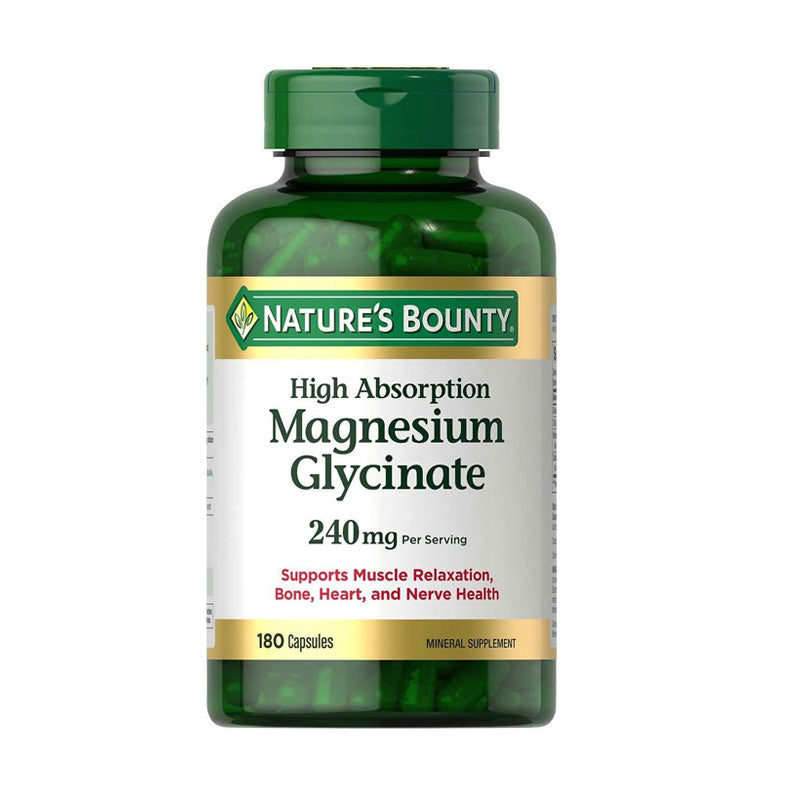
Nature's Bounty Magnesium Glycinate 240mg, 180 Ct
- Best for: Larger-pack imported magnesium glycinate
- Strength: 240mg Listed Strength
- Pack: 180 Capsules
Nature's Bounty Magnesium Glycinate is a larger-pack imported option and is currently listed as available on Vitamins House.
The product is marketed at 240mg strength. As with every magnesium supplement, confirm the current Supplement Facts panel and serving size on the bottle you receive so you know how much elemental magnesium is provided per daily serving.
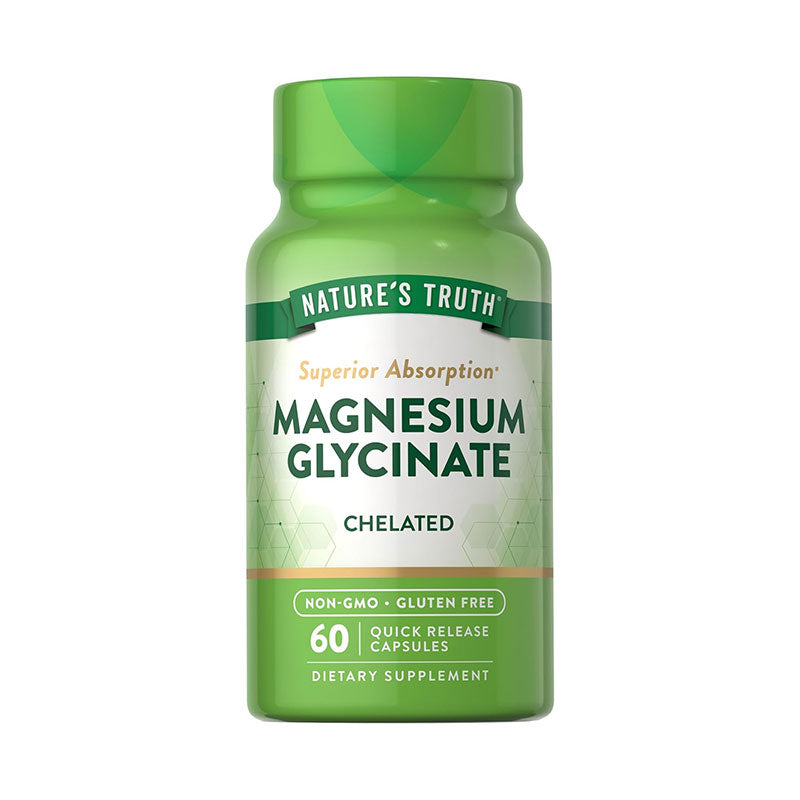
Nature's Truth Magnesium Glycinate 200mg, 60 Ct
- Best for: Moderate-strength imported glycinate option
- Strength: 200mg Listed Strength
- Pack: 60 Capsules
Nature's Truth Magnesium Glycinate provides another imported option at a lower listed strength than the Nature's Bounty product.
This can suit shoppers who want a straightforward magnesium glycinate formula rather than a blend containing several additional nutrients.
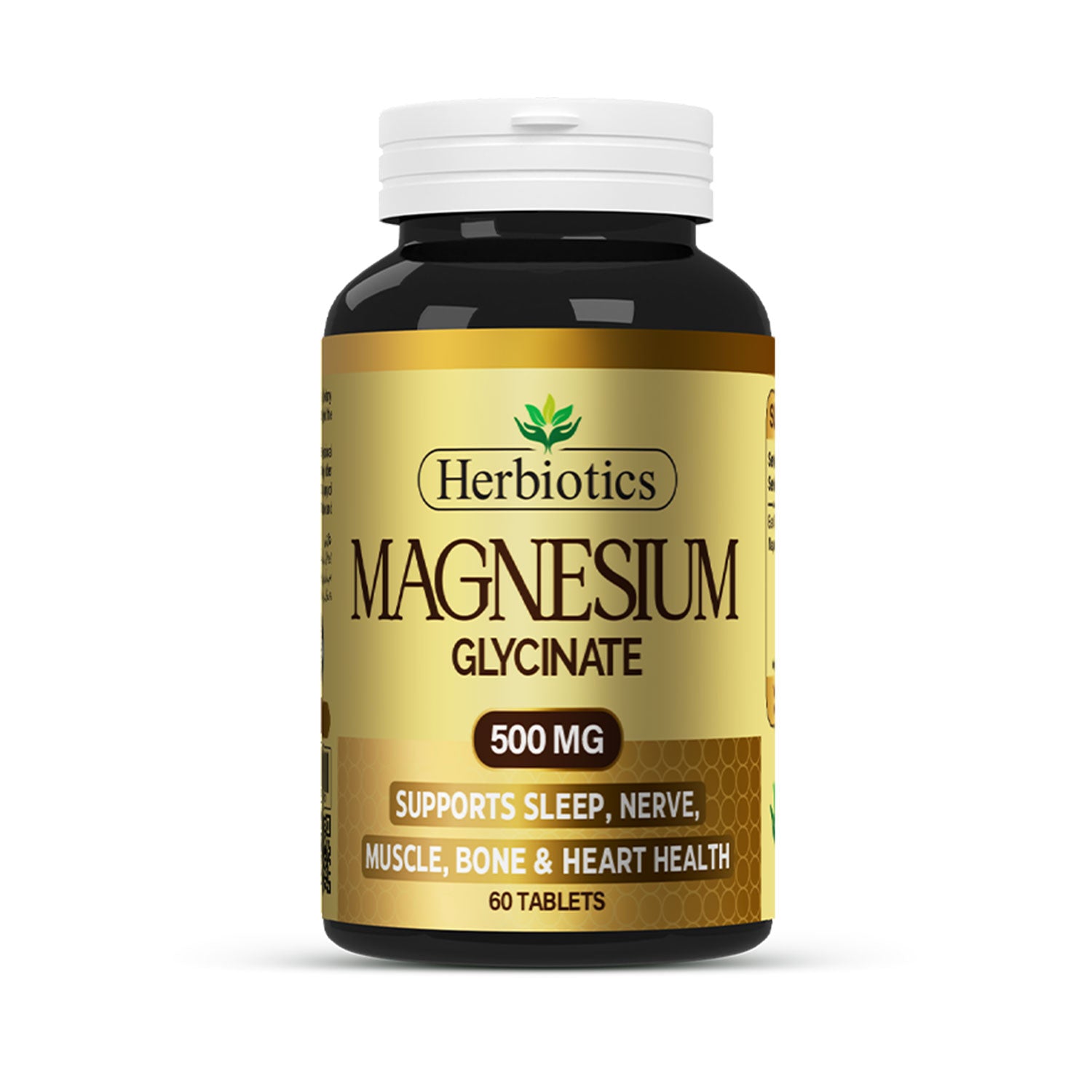
Herbiotics Magnesium Glycinate 500mg, 60 Ct
- Best for: Affordable Pakistani magnesium glycinate option
- Strength: 500mg Magnesium Glycinate
- Pack: 60 Tablets
Herbiotics Magnesium Glycinate 500mg offers a lower-priced local alternative and is currently shown as available on Vitamins House.
Be particularly careful when comparing this product with a bottle listing “200mg magnesium” or “240mg magnesium.”
A front-label claim of 500mg magnesium glycinate may describe the weight of the magnesium-glycine compound rather than 500mg of elemental magnesium.
Compare the Supplement Facts panel rather than assuming 500mg is automatically stronger than a 200mg elemental-magnesium product.
How to Choose the Best Magnesium Glycinate Supplement
1. Check Elemental Magnesium
This is the most important comparison.
Don't simply compare:
- 200mg
- 240mg
- 500mg
- 850mg
- 1000mg
without understanding what those numbers represent.
Look specifically for the amount of magnesium listed on the Supplement Facts panel.
2. Check the Serving Size
A product may say 240mg on the front but require two capsules to provide the listed serving.
Another might provide its stated amount from one tablet.
This changes both convenience and cost per serving.
3. Compare Pack Size
Don't compare bottle prices without calculating how many daily servings you receive.
A 180-capsule imported bottle may cost much more upfront but provide substantially more servings than a 30-tablet product.
4. Look for Magnesium Glycinate or Bisglycinate
Both terms commonly appear on chelated magnesium products.
If your reason for choosing glycinate is digestive tolerance, confirm that the product actually uses a glycinate/bisglycinate form rather than assuming every magnesium supplement works the same way.
5. Check Other Ingredients
Some magnesium products contain:
- Vitamin B6
- Vitamin D
- Zinc
- Calcium
- Herbal ingredients
Extra ingredients aren't automatically better.
They can also duplicate supplements you're already taking.
Magnesium Glycinate vs Citrate vs Oxide
There is no single magnesium form that is automatically best for everybody.
| Form | Common Reason for Choosing It | Consideration |
|---|---|---|
| Magnesium Glycinate / Bisglycinate | General supplementation and people prioritising digestive tolerance | Usually more expensive than basic magnesium forms |
| Magnesium Citrate | Common supplement form; also used because magnesium salts can have laxative effects | May loosen stools in some people |
| Magnesium Oxide | Budget-friendly and commonly available | Generally less bioavailable than several other magnesium salts and more likely to have a laxative effect |
Your choice should depend on why you're supplementing, how much elemental magnesium the product provides, digestive tolerance, price and healthcare advice.
What Foods Are High in Magnesium?
There is no natural food that contains “magnesium glycinate.”
Magnesium glycinate is a manufactured supplement form.
But plenty of foods contain magnesium itself.
Useful options commonly available in Pakistan include:
- Pumpkin seeds
- Almonds
- Cashews
- Peanuts
- Spinach and saag
- Beans
- Lentils and daal
- Chickpeas
- Whole grains
- Dark chocolate
- Avocado
Food should remain the foundation because magnesium-rich foods also provide protein, fibre, healthy fats and other micronutrients.
Who Is More Likely to Have Low Magnesium?
True symptomatic magnesium deficiency caused simply by low dietary intake is uncommon in otherwise healthy people because the kidneys help conserve magnesium.
However, some groups are more likely to have inadequate magnesium status.
These can include people with:
- Gastrointestinal diseases affecting absorption
- Type 2 diabetes
- Long-term excessive alcohol use
- Older age
- Certain medications
Severe magnesium deficiency can produce symptoms such as:
- Loss of appetite
- Nausea
- Fatigue
- Weakness
- Muscle cramps
- Numbness or tingling
- Abnormal heart rhythms in severe cases
These symptoms are not specific to magnesium deficiency.
Don't diagnose yourself based on cramps or tiredness alone.
Is Magnesium Deficiency Common in Pakistan?
The existing version of this article describes magnesium deficiency in Pakistan as a widespread issue without providing reliable national prevalence data. :contentReference[oaicite:2]{index=2}
I would not keep that claim.
Pakistan certainly has nutritional challenges, and diets low in legumes, nuts, seeds, whole grains and leafy vegetables can provide less magnesium.
But without recent representative national magnesium-status data, it is better to say that inadequate dietary magnesium intake may occur rather than quote or imply a national deficiency rate we cannot support.
When Is the Best Time to Take Magnesium Glycinate?
There is no scientifically established universal hour at which magnesium glycinate suddenly becomes more effective.
Many people choose the evening because glycinate is commonly associated with relaxation and sleep routines.
Others take it earlier in the day.
The practical priorities are:
- Follow the product directions
- Take it consistently
- Use it with food if that improves stomach tolerance
- Separate it appropriately from interacting medicines
We've covered this question separately in our Best Time to Take Magnesium Supplements guide, so there is no need to duplicate the entire timing topic here.
Magnesium Glycinate Side Effects
Magnesium glycinate is often chosen because many users find it easier on digestion than some other magnesium salts.
But it can still cause side effects.
Too much supplemental magnesium can cause:
- Diarrhea
- Nausea
- Abdominal cramping
- Stomach discomfort
Very large amounts of magnesium can cause much more serious toxicity, including low blood pressure, breathing difficulty and abnormal heart rhythm.
This is uncommon in healthy adults taking ordinary supplement amounts, but the risk increases when kidney function is impaired.
Who Should Be Careful With Magnesium Glycinate?
People With Kidney Disease
Your kidneys are responsible for eliminating excess magnesium.
When kidney function is significantly impaired, magnesium can accumulate.
People with kidney disease should therefore discuss magnesium supplementation with their healthcare provider rather than self-prescribing high doses.
People Taking Certain Antibiotics
Magnesium can bind with some antibiotics and reduce their absorption.
This is particularly relevant to tetracycline and quinolone antibiotics.
NIH guidance recommends taking these antibiotics at least 2 hours before or 4–6 hours after a magnesium-containing supplement.
People Taking Bisphosphonates
Magnesium can also reduce absorption of oral bisphosphonate medicines used for osteoporosis.
These usually need to be separated from magnesium supplements.
People Taking Diuretics or Long-Term Acid-Reflux Medication
Some diuretics can increase or decrease magnesium loss, while long-term proton-pump inhibitor use can lower magnesium levels in some people.
Discuss regular magnesium supplementation with your doctor or pharmacist if you use these medicines.
Can You Take Magnesium Glycinate Every Day?
Many magnesium supplements are formulated for daily use.
But “daily” does not mean “unlimited.”
Consider:
- Your magnesium intake from food
- The elemental magnesium in the supplement
- Other supplements containing magnesium
- Kidney function
- Medications
- The reason you're supplementing
For healthy adults, the established upper limit for magnesium specifically from supplements and medications is 350mg per day unless a healthcare provider recommends otherwise.
Can Pregnant Women Take Magnesium Glycinate?
Magnesium is an essential nutrient during pregnancy.
But pregnancy is not the time to assume that any supplement is automatically safe simply because it contains an essential mineral.
Your prenatal multivitamin may already contain magnesium.
Your total magnesium requirement also depends on age.
If you're pregnant or breastfeeding and want to add magnesium glycinate for cramps, sleep or another reason, discuss the product and elemental-magnesium amount with your obstetrician or healthcare professional.
Frequently Asked Questions About Magnesium Glycinate
What Is Magnesium Glycinate Best For?
Magnesium glycinate is primarily a way to supplement magnesium in a chelated form that many people find well tolerated. Magnesium supports normal muscle and nerve function, energy metabolism and bone health. Research on magnesium bisglycinate for sleep is promising, but the benefit observed in a recent randomized trial was modest.
Is Magnesium Glycinate Good for Sleep?
It may help some people, particularly when magnesium intake is low, but the evidence is not strong enough to call magnesium glycinate a treatment for insomnia. A 2025 randomized trial found a small improvement in insomnia symptoms after four weeks of magnesium bisglycinate supplementation.
Does Magnesium Glycinate Reduce Anxiety?
Research on magnesium supplementation and anxiety has reported some promising findings, but systematic reviews describe the quality of evidence as limited. Magnesium should not replace appropriate treatment for an anxiety disorder.
Is Magnesium Glycinate Good for Muscle Cramps?
Magnesium is required for normal muscle function, and magnesium deficiency can cause neuromuscular symptoms. However, not every muscle cramp results from magnesium deficiency, so supplementation is not guaranteed to solve cramps in everyone.
What Is the Difference Between Magnesium Glycinate and Bisglycinate?
The terms are often used interchangeably on supplement labels. They refer to magnesium chelated with the amino acid glycine. When comparing products, the actual elemental-magnesium amount on the Supplement Facts panel is more useful than focusing on the naming variation.
How Much Magnesium Glycinate Should I Take?
Follow the serving instructions on your specific product and focus on the amount of elemental magnesium it provides. Adult total magnesium requirements are generally around 310–420mg per day depending on age and sex, while the upper limit specifically for magnesium from supplements and medications is 350mg per day unless medically supervised.
Can I Take Magnesium Glycinate Every Night?
Many products are designed for daily supplementation, and some people prefer taking glycinate in the evening. There is no requirement that it must be taken at night. Follow the label and make sure your total supplemental magnesium remains appropriate.
Does Magnesium Glycinate Cause Diarrhea?
Magnesium glycinate is often chosen by people who want a magnesium form that is easier to tolerate, but gastrointestinal side effects are still possible. Excess supplemental magnesium can cause diarrhea, nausea and abdominal cramping.
How Long Does Magnesium Glycinate Take to Work?
There is no scientifically established timeline such as “three days” or “one week” that applies to everyone. Results depend on your baseline magnesium status, the reason you are supplementing and the outcome being measured. The recent sleep trial assessed results over four weeks rather than promising immediate effects.
Is 500mg Magnesium Glycinate the Same as 500mg Magnesium?
Not necessarily. A product may list the weight of the magnesium glycinate compound rather than 500mg of elemental magnesium. Always check the Supplement Facts panel for the amount declared specifically as magnesium.
Which Magnesium Glycinate Is Best in Pakistan?
There is no single best option for everyone. Nature's Bounty offers a larger imported pack, Nature's Truth provides a 200mg-labelled imported option, while Herbiotics provides a lower-cost Pakistani magnesium glycinate product. Compare elemental magnesium, serving size, pack size and price rather than choosing only by the largest number on the front.
Conclusion
The real magnesium glycinate benefits become much clearer when you separate established nutrition from supplement marketing.
Magnesium is an essential mineral required for normal muscle function, nerve signalling, energy production and bone health.
Magnesium glycinate provides that mineral in a chelated form that many people choose because of its digestive tolerance.
Research on sleep is becoming more interesting—a recent magnesium bisglycinate trial found a modest benefit—but magnesium should not be advertised as a guaranteed cure for insomnia, anxiety, muscle cramps or hypertension.
If you're buying magnesium glycinate in Pakistan, don't simply compare 200mg, 500mg or 1000mg on the front of the bottle.
Look for:
- Elemental magnesium per serving
- Magnesium form
- Serving size
- Number of servings
- Additional ingredients
- Medication interactions
- Your existing dietary magnesium intake
And remember that magnesium-rich foods such as nuts, seeds, lentils, beans, whole grains and leafy greens remain an excellent way to increase magnesium intake naturally.
The best magnesium supplement isn't automatically the one with the biggest number. It's the one that provides an appropriate amount of magnesium for your actual needs.

