

Fish Oil Side Effects: Fishy Burps, Safety & Who Should Be Careful

Fish oil supplements are widely used as a source of EPA and DHA Omega-3 fatty acids, but they can still cause side effects.
The good news is that most fish oil side effects are mild.
The most common complaints include an unpleasant taste, fishy aftertaste, bad breath, heartburn, nausea, stomach discomfort and diarrhea.
However, higher-dose Omega-3 supplements can also interact with certain medicines, which is why taking more fish oil is not automatically better.
The NIH Office of Dietary Supplements lists unpleasant taste, bad breath, heartburn, nausea, stomach discomfort, diarrhea, headache and smelly sweat among the possible side effects of Omega-3 supplements.
This guide explains the most common fish oil side effects, why fishy burps happen, what you can do if fish oil upsets your stomach, medication interactions and when you should speak with a healthcare professional.
Fish Oil Side Effects at a Glance
| Possible Side Effect | How Common / Serious? | What to Consider |
|---|---|---|
| Fishy aftertaste | Usually mild | Check product directions and coated formulas |
| Bad breath | Usually mild | Can occur with fish oil supplements |
| Heartburn | Usually mild | Taking the product as directed with meals may be easier for some people |
| Nausea | Usually mild | Check serving size and product instructions |
| Stomach discomfort | Usually mild | Higher servings may be harder to tolerate |
| Diarrhea | Usually mild | Can occur with Omega-3 supplementation |
| Headache | Reported but less discussed | Stop and seek advice if symptoms are persistent or concerning |
| Medication interaction | Potentially important | High-dose Omega-3 can interact with anticoagulants |
What Are the Most Common Fish Oil Side Effects?
The NIH Omega-3 fact sheet describes most side effects from Omega-3 supplements as mild.
Reported side effects include:
- Unpleasant taste in the mouth
- Bad breath
- Heartburn
- Nausea
- Stomach discomfort
- Diarrhea
- Headache
- Smelly sweat
Not everyone experiences these effects, and tolerability can vary depending on the product, serving size and individual digestive system.
Why Does Fish Oil Cause Fishy Burps?
Fishy burps and aftertaste are among the most familiar practical complaints associated with fish oil capsules.
Fish oil naturally comes from marine sources, so some products can leave a noticeable taste or smell after swallowing.
Different manufacturers try to reduce this problem using techniques such as:
- Coated softgels
- Enteric coatings
- Natural flavours such as lemon
- More concentrated capsules
For example, the current Nature's Bounty Fish Oil 1000mg listing describes its odor-less coated softgels as being designed to minimise aftertaste and fish burps.
How Can You Reduce Fishy Burps?
There is no single method that works for everyone, but several practical steps may be worth considering.
Follow the Product Directions
Many fish oil manufacturers recommend taking their products with food or meals.
Do not automatically take fish oil on an empty stomach if the manufacturer specifically recommends taking it with food.
Consider a Coated Fish Oil Capsule
Some products are specifically formulated to reduce fishy aftertaste.
For example, Nature's Bounty describes its coated 1000mg Fish Oil softgels as designed to minimise fish burps.
Compare Concentration
A more concentrated Omega-3 formula can provide more EPA and DHA in fewer capsules.
For example, one product may provide 300mg EPA+DHA per softgel while another provides 600mg.
If the required serving involves fewer capsules, some people may find the routine easier to tolerate.
This does not mean higher-strength fish oil is automatically better. Our guide comparing fish oil 1000mg vs 1200mg vs triple strength explains why concentration should be judged by EPA and DHA rather than the front-label number.
Can Fish Oil Cause Heartburn?
Yes. Heartburn is one of the mild side effects listed by the NIH for Omega-3 supplements.
Some people may notice:
- Acid-like discomfort
- Fishy reflux
- Belching
- Unpleasant taste after taking the capsule
If you regularly experience significant heartburn after taking fish oil, do not simply keep increasing or repeating the dose.
Check the product directions, serving size and whether the supplement is being taken as recommended.
If symptoms are persistent or severe, discuss them with a healthcare professional.
Can Fish Oil Cause Nausea?
Yes. Nausea is a recognised possible side effect of Omega-3 supplements.
This can be more noticeable in some people when taking larger capsules or multiple softgels at once.
If nausea occurs, check:
- How many capsules you are taking
- The EPA and DHA concentration
- Whether the label recommends taking it with food
- Whether you recently increased the serving
- Whether another supplement may also be upsetting your stomach
Do not assume that every product labelled 1000mg has the same strength. Our fish oil dosage guide explains how to calculate the actual EPA and DHA you are getting each day.
Can Fish Oil Cause Diarrhea or Stomach Problems?
Yes. The NIH lists both stomach discomfort and diarrhea among possible Omega-3 supplement side effects.
Digestive tolerance can vary considerably between people.
Possible complaints include:
- Loose stools
- Stomach discomfort
- Nausea
- Heartburn
- Belching
If these symptoms start after increasing your fish oil intake, check the actual EPA and DHA amount rather than only counting capsules.
Does Higher-Strength Fish Oil Cause More Side Effects?
Not automatically.
However, a highly concentrated capsule can provide much more EPA and DHA than a standard fish oil capsule.
| Example Formula | EPA + DHA / Omega-3 | Relative Concentration |
|---|---|---|
| Webber Naturals Omega-3 | 300mg EPA + DHA | Standard |
| Core Champs Omega-3 | 600mg EPA + DHA | Concentrated |
| GNC Triple Strength | High-concentration EPA/DHA formula | Triple Strength |
The important point is that you should know the actual amount you are taking.
One concentrated softgel and three standard softgels can represent very different EPA+DHA totals.
If you need help understanding those numbers, see our EPA vs DHA guide.
Can Fish Oil Increase Bleeding Risk?
Higher-dose Omega-3 supplementation deserves more caution if you take medicines that affect blood clotting.
The NIH Office of Dietary Supplements notes that high doses of Omega-3 may cause bleeding problems when taken with warfarin or other anticoagulant medicines.
This does not mean ordinary fish oil automatically causes dangerous bleeding in everyone.
It does mean that you should speak with your healthcare professional before using higher-dose Omega-3 if you take:
- Warfarin
- Other anticoagulants
- Antiplatelet medicines
- Other prescription medication that could interact with supplements
Do not stop or change a prescribed medicine because you want to take fish oil.
How Much Omega-3 Is Too Much?
A safety limit should not be treated as a recommended daily dose.
The NIH consumer guidance reports that the U.S. Food and Drug Administration recommends consuming no more than 5 grams per day of EPA and DHA combined from dietary supplements.
That does not mean 5 grams per day is the ideal intake for most people.
It is a safety-related ceiling, not a target.
The appropriate amount depends on your diet, health circumstances, reason for supplementation and the specific product.
For diagnosed medical conditions or therapeutic Omega-3 doses, follow professional medical advice rather than increasing over-the-counter capsules yourself.
More Fish Oil Is Not Always Better
Taking extra capsules does not guarantee extra benefits.
Increasing the amount may instead increase:
- Digestive discomfort
- Fishy aftertaste
- Nausea
- Diarrhea
- Medication interaction concerns
This is why you should compare the EPA and DHA content and follow the specific product directions.
Can Fish Oil Cause an Allergic Reaction?
Many fish oil supplements contain ingredients derived from fish such as anchovy, sardine, mackerel, salmon, tuna or cod.
If you have a known fish or seafood allergy, do not assume that a fish oil supplement is automatically suitable for you.
Check the ingredient and allergen information on the product label and discuss supplement use with an appropriate healthcare professional.
People avoiding fish for dietary reasons can also explore non-fish Omega-3 sources such as algal oil. Our comparison of fish oil vs Omega 3 explains the difference between fish oil, algae-derived Omega-3, ALA, EPA and DHA.
Can Fish Oil Cause Headaches?
Headache is included among the possible side effects listed in the NIH consumer guidance for Omega-3 supplements.
However, headaches have many possible causes, so a headache occurring while taking fish oil does not automatically prove the supplement caused it.
If you repeatedly notice symptoms after taking a supplement, stop and seek professional advice if necessary rather than continuing to increase the serving.
Can Fish Oil Make You Smell?
The NIH also lists bad breath and smelly sweat among possible Omega-3 supplement side effects.
This is not experienced by everyone, but it is another reason some consumers prefer coated or flavoured fish oil products.
Fish Oil Side Effects vs Benefits
Fish oil is commonly taken because it provides EPA and DHA, but side effects and potential benefits should be considered separately.
| Why People Take Fish Oil | Possible Side Effects |
|---|---|
| Increase EPA and DHA intake | Fishy taste or bad breath |
| Supplement a diet low in oily fish | Heartburn |
| General Omega-3 nutrition | Nausea or stomach discomfort |
| Higher-dose use under medical guidance | Greater need to consider medicine interactions |
If you want to understand why people use Omega-3 in the first place, our guide to fish oil capsules uses explains where the evidence is stronger and where supplement claims are less certain.
Who Should Be More Careful With Fish Oil?
Extra caution is sensible if you:
- Take anticoagulant medicine
- Take antiplatelet medication
- Use multiple prescription medicines
- Have a known fish or seafood allergy
- Are pregnant or breastfeeding
- Have a diagnosed medical condition
- Are considering a high-dose Omega-3 regimen
- Are trying to use fish oil to treat high triglycerides or another diagnosed condition
In these situations, discuss supplementation with a healthcare professional rather than selecting a dose based only on an online article or supplement label.
Do Fish Oil Side Effects Depend on the Serving Size?
The serving size matters because different products provide very different amounts of EPA and DHA.
For example:
| Product Type | Omega-3 Per Softgel | Example Number of Capsules |
|---|---|---|
| Standard Fish Oil | 300mg EPA + DHA | May require multiple capsules depending on the product directions |
| Concentrated Fish Oil | 600mg EPA + DHA | More Omega-3 per capsule |
| Triple Strength Fish Oil | Higher-concentration formula | May provide a larger EPA+DHA amount in fewer softgels |
This is why you should not copy the serving size from one brand and apply it to another.
Should You Stop Taking Fish Oil if You Get Side Effects?
Mild symptoms such as occasional aftertaste are different from persistent or severe symptoms.
If you experience ongoing digestive problems, unusual symptoms or something that concerns you, stop and seek appropriate professional advice rather than continuing to increase the amount.
Seek urgent medical care for symptoms of a serious allergic reaction or another severe medical problem.
How to Choose a Fish Oil That May Be Easier to Take
Check for Coated Softgels
Some formulas use coatings designed to reduce aftertaste or fish burps.
Check the EPA and DHA Concentration
A concentrated formula may provide more Omega-3 per capsule, although it is not automatically the best choice for everyone.
Check the Serving Size
A bottle requiring three capsules per day may be less convenient for some people than one requiring fewer softgels.
Follow the Directions With Food When Stated
Several manufacturers specifically recommend taking fish oil with meals.
Do Not Buy Based Only on 1000mg or 1200mg
Those numbers generally describe total fish oil, not the amount of EPA and DHA.
If you are comparing formulas before buying, our guide to choosing fish oil supplements in Pakistan explains concentration, purity, serving size and label information in more detail.
Fish Oil Supplements to Compare in Pakistan
Different fish oil formulas vary in concentration, serving size and capsule design. Here are several examples available through Vitamins House.
Nature's Bounty Fish Oil 1000mg
Nature's Bounty Fish Oil 1000mg provides 300mg of total Omega-3 per softgel.
The current product information states that the odor-less fish oil is coated to help minimise aftertaste and fish burps, making it particularly relevant for people concerned about one of the most common practical complaints with fish oil.
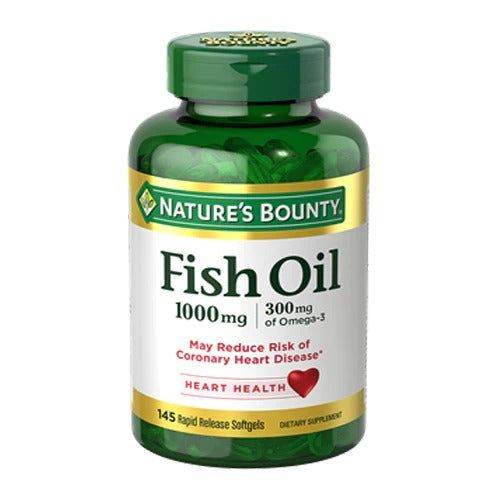
Nature's Bounty Fish Oil 1000mg
Best for: Coated everyday fish oil
Pack: 145 Softgels
Price: Rs7,641
Buy NowWebber Naturals Omega-3 Fish Oil
Webber Naturals provides a traditional 1000mg fish oil formula with clearly stated EPA and DHA.
Each softgel contains 180mg EPA and 120mg DHA, giving 300mg combined EPA+DHA.
The current label directions recommend taking the capsules with meals.
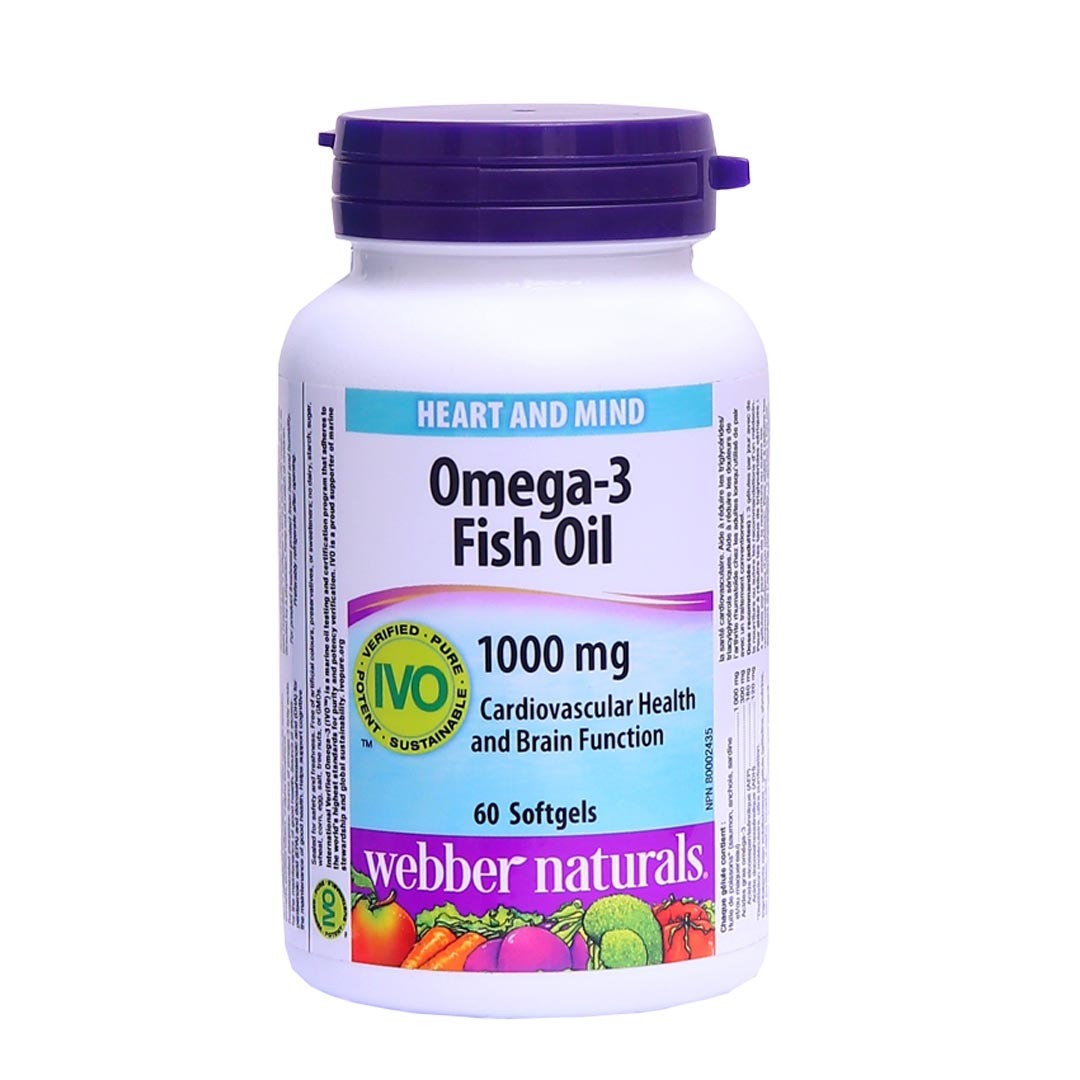
Webber Naturals Omega-3 Fish Oil 1000mg
Best for: Everyday EPA and DHA
Pack: 60 Softgels
Price: Rs3,990
Buy NowCore Champs Omega-3 Fish Oil
Core Champs provides a more concentrated formula with 360mg EPA and 240mg DHA per softgel, giving 600mg combined EPA+DHA.
The current product directions recommend taking the softgels with meals.
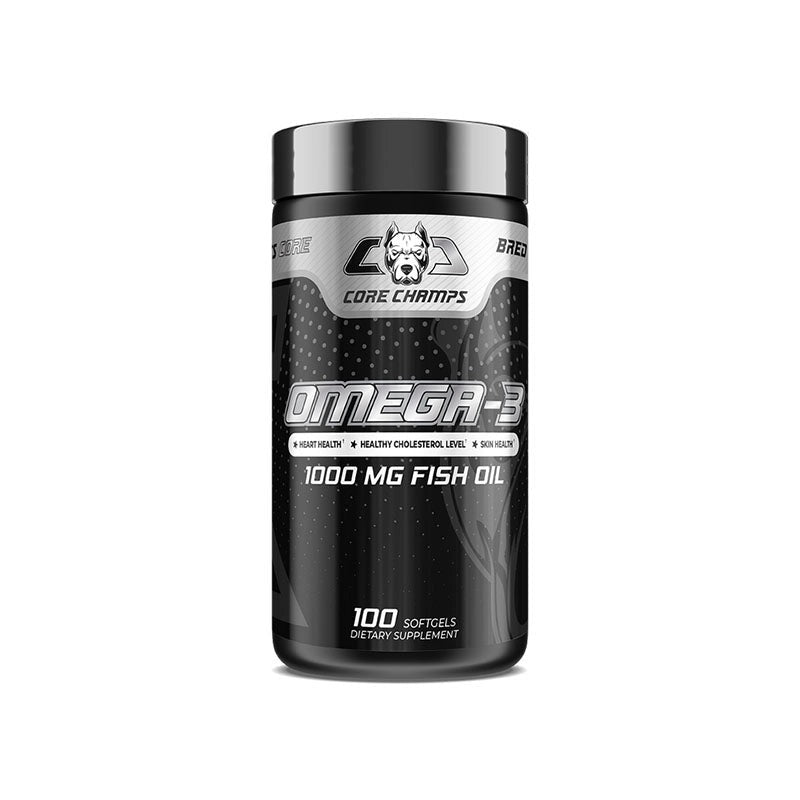
Core Champs Omega-3 Fish Oil
Best for: Concentrated EPA + DHA
Pack: 100 Softgels
Price: Rs5,000
Buy NowFish Oil Side Effects: Standard vs Concentrated Formulas
| Product Type | Typical Difference | What to Check |
|---|---|---|
| Standard Fish Oil | Lower EPA+DHA per capsule | Number of capsules required |
| Concentrated Fish Oil | More EPA+DHA per softgel | Total daily EPA+DHA |
| Coated Fish Oil | Designed to reduce aftertaste in some products | Manufacturer description and directions |
| High-Dose Omega-3 | Greater total Omega-3 intake | Medication interactions and professional guidance |
Frequently Asked Questions About Fish Oil Side Effects
What are the most common side effects of fish oil?
Commonly reported Omega-3 supplement side effects include unpleasant taste, bad breath, heartburn, nausea, stomach discomfort, diarrhea, headache and smelly sweat. These effects are generally mild.
Why does fish oil make me burp?
Fish oil can leave a marine aftertaste or cause belching in some people. Certain manufacturers use coated or enteric-coated softgels designed to reduce fishy aftertaste and burps.
Can fish oil cause acid reflux?
Heartburn is a recognised possible side effect of Omega-3 supplements. If significant reflux or heartburn repeatedly occurs after taking fish oil, check the product directions and seek medical advice if symptoms continue.
Can fish oil cause diarrhea?
Yes. Diarrhea and stomach discomfort are among the possible mild side effects listed by the NIH for Omega-3 supplements.
Can fish oil cause nausea?
Yes. Nausea is another possible mild side effect. Check your serving size and follow the manufacturer's directions.
Can fish oil cause headaches?
Headache is listed as a possible side effect of Omega-3 supplementation, although headaches can have many other causes.
Does fish oil cause bad breath?
It can. Bad breath and unpleasant taste are recognised possible side effects of Omega-3 supplements.
Is fish oil safe to take every day?
Many fish oil supplements are intended for regular use when taken according to their directions. However, appropriate intake depends on the EPA+DHA concentration, diet, medications and individual health circumstances.
Can fish oil interact with blood thinners?
Yes. The NIH notes that high doses of Omega-3 may cause bleeding problems when taken with warfarin or other anticoagulant medicines. Speak with your healthcare professional before combining higher-dose Omega-3 with these medicines.
Can I take fish oil if I have a fish allergy?
Fish oil supplements commonly contain ingredients derived from fish. If you have a fish or seafood allergy, check the allergen information and discuss supplement use with a qualified healthcare professional.
Does taking fish oil with food help?
Many manufacturers recommend taking fish oil with meals. Follow the directions for the specific product you use rather than applying one routine to every fish oil supplement.
Is higher-strength fish oil more dangerous?
Not automatically, but concentrated formulas can provide much more EPA and DHA per capsule. This makes it especially important to check the total daily amount and avoid increasing the serving without understanding the concentration.
How much fish oil is too much?
The NIH reports that the FDA recommends no more than 5 grams per day of EPA and DHA combined from dietary supplements. This is a safety ceiling rather than a recommended daily target, and higher-dose supplementation may require professional supervision.
How to Use Fish Oil More Safely
A few basic habits can make fish oil supplementation easier to understand and help reduce avoidable problems.
- Read the EPA and DHA amounts, not just total fish oil.
- Follow the manufacturer's serving directions.
- Take the supplement with meals when the label recommends it.
- Do not increase the dose simply because you want faster results.
- Check for medication interactions.
- Check allergen information if you have a fish or seafood allergy.
- Consider coated formulas if fishy aftertaste is a problem.
- Seek medical advice for persistent or concerning symptoms.
If you are comparing which supplement to buy rather than dealing with side effects from an existing product, our guide to the best Omega 3 capsules in Pakistan compares leading options by EPA, DHA, concentration, pack size and price.
Fish Oil Side Effects: The Bottom Line
Most fish oil side effects are relatively mild.
The most common problems include:
- Fishy or unpleasant taste
- Bad breath
- Heartburn
- Nausea
- Stomach discomfort
- Diarrhea
For many people, the bigger safety concern is not a fishy burp but taking more EPA and DHA than they realise or combining high-dose Omega-3 with medicines that may interact with it.
Always check the serving size and actual EPA+DHA concentration instead of judging a supplement only by the number of capsules or total fish oil milligrams.
If you want to compare different strengths, formulations and current options, browse the complete range of fish oil supplements in Pakistan at Vitamins House.

